
A few years ago, being online was a luxury for many people in Ghana. Now it is hard to get by without it. We apply for jobs, register businesses, use government services, attend classes, pay bills and keep up with family online.
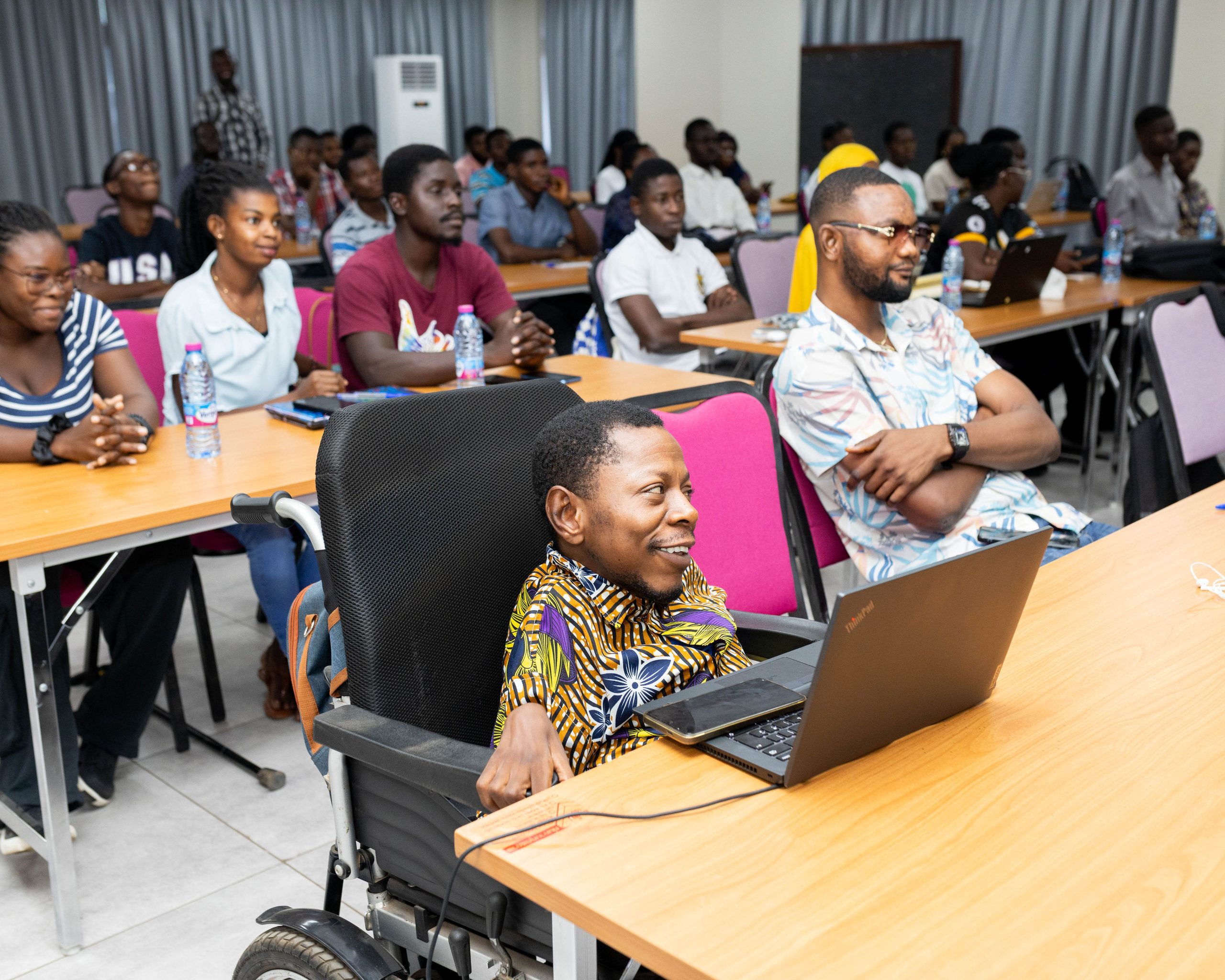
For many persons with disabilities, a lot of that is harder than it should be, and some of it is impossible.
Picture applying for a job on a website a screen reader cannot navigate. Or signing up for a service where the buttons have no labels. Or joining a video meeting with no captions. Or being sent course material in a format you cannot open. None of this is unusual. It is what many persons with disabilities meet online every day.
A website can shut people out as surely as a staircase
When people talk about accessibility they usually mean physical spaces: ramps, lifts, accessible washrooms, transport. Those matter. So do websites, mobile apps, online learning platforms and digital services. A building without a ramp keeps someone out. A website that does not work with assistive technology does the same.
As more of life in Ghana moves online, accessibility cannot be left to the end of a project. Government agencies, schools and universities, businesses, startups and developers share the responsibility for building digital products that everyone can use.
Most of the fixes are simple
None of this is out of reach. The main fixes are well known: describe images in text, make sure the site works with a screen reader and a keyboard, caption videos, and use colours with enough contrast.
These look like small changes. For the person who needs them, they decide whether the site can be used at all.
They help other people too. Captions are useful to deaf viewers and to anyone watching a video somewhere noisy. Clear navigation helps everybody find things. Accessible design tends to be better design.
An opening for Ghana’s tech sector
Developers, designers and founders here can build inclusive products from the first version, which is far easier than removing barriers later. As more startups launch and more services go online, accessibility should be a standard feature.
At TechAble we believe technology can level the playing field, but only when accessibility is part of the foundation. Ghana’s future will be more digital than its present. We will judge its progress by how many people can use that technology and benefit from it.